

From chrome-finned Cadillacs to seamless glass slabs — we traded personality for polish. Here’s why old tech had soul, and new tech has specs.
There was a time when technology arrived like a cultural event. The first colour televisions weren’t just appliances — they were furniture. Cars didn’t just move people; they made statements in steel and chrome. Computers had personality built right into their plastic bodies. Something changed. Today’s tech is undeniably more powerful, yet somehow far less interesting. Let’s dig in.
“Old technology was designed to be noticed. New technology is designed to disappear.”
The shift wasn’t accidental. Three forces drove us here: miniaturisation — less physical space means less room for personality. Globalisation — one product for every market demands the safest possible design. And the rise of software-first thinking — where hardware became merely a screen to run apps on. The result? A decade of slabs, rectangles, and “space grey.”
Cars: Fins vs Flat
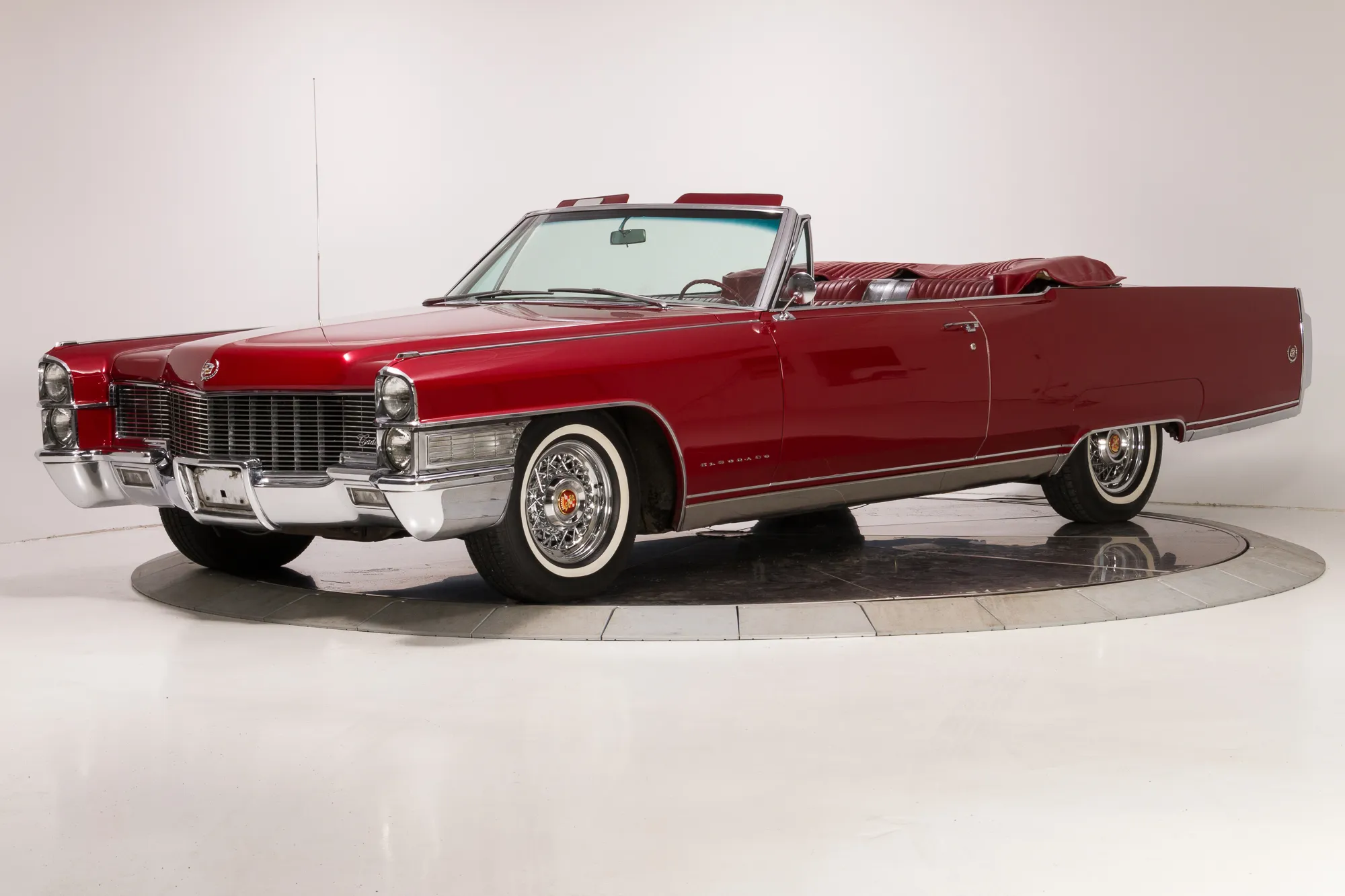
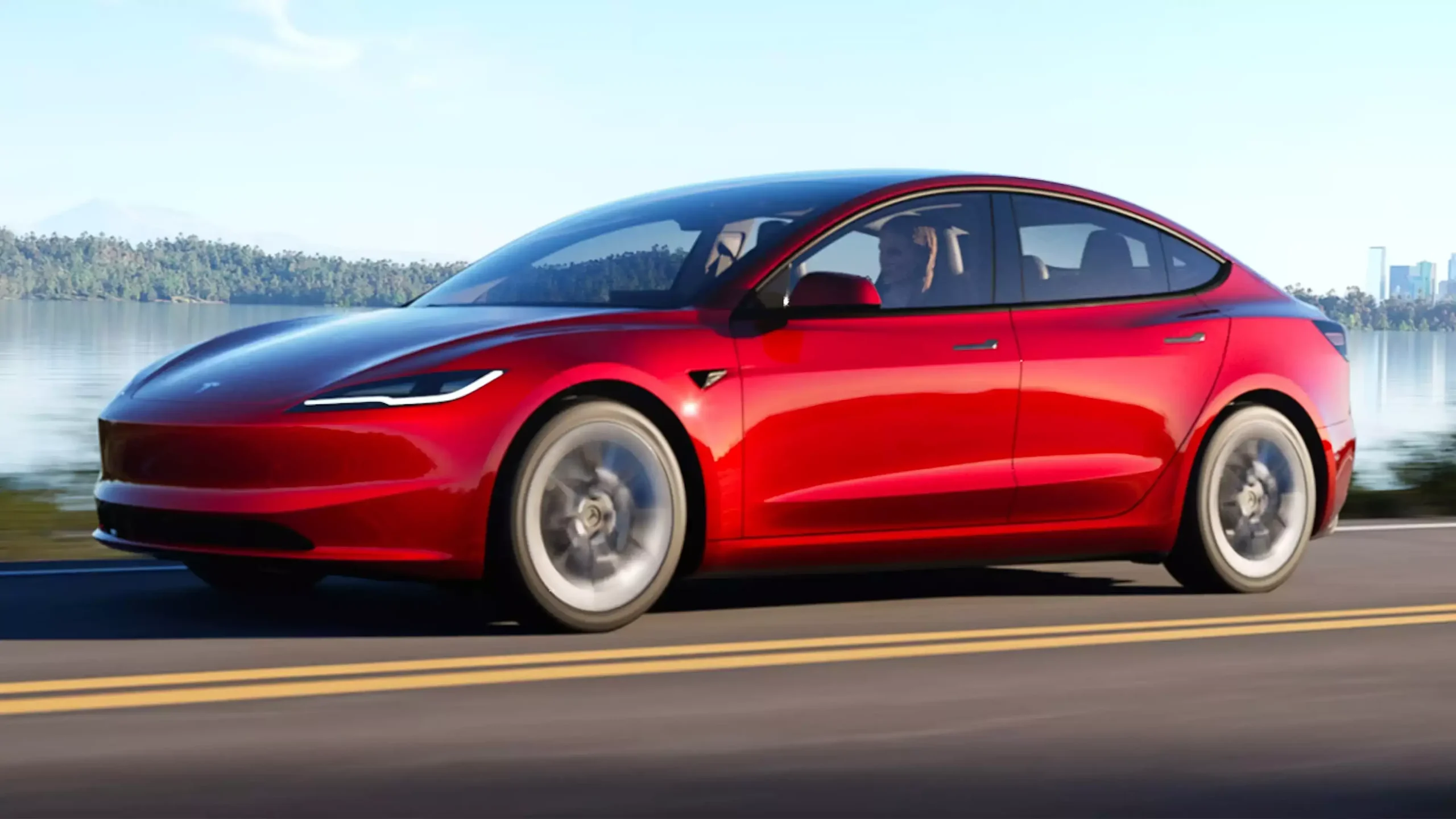
The 1950s through the 1970s were the golden age of automotive design. Tail fins, chrome bumpers, two-tone paint, and wrap-around windscreens weren’t just styling choices — they were cultural optimism cast in steel. A 1959 Cadillac Eldorado didn’t just drive you somewhere; it announced you. Today’s electric vehicles, however brilliant under the hood, are aero-optimised teardrops genuinely difficult to tell apart at a glance.
| THEN — 1959 Cadillac Eldorado Rocket-ship on wheels Towering tail fins that scraped the sky, chrome on every surface, and a jet-age dashboard where every gauge was a small sculpture. You could identify it from a kilometre away. It was built to be seen, photographed, and remembered. It had opinions about itself. | NOW — 2024 Tesla Model 3 A rolling touchscreen Flush door handles, a minimalist interior stripped of every unnecessary button, one giant central screen for everything. Brilliant engineering, absolutely. But you’d need to squint hard to tell it apart from ten of its nearest rivals parked side by side in a car park. |
Even the driving experience reflects this shift. Old cars had heavy, communicative steering and engines you could hear and feel through the seat. Modern cars are increasingly automated, assisted, and insulated — safer and smarter, but removing the conversation between driver and machine that made motoring feel alive.
Computers: Character vs Chassis
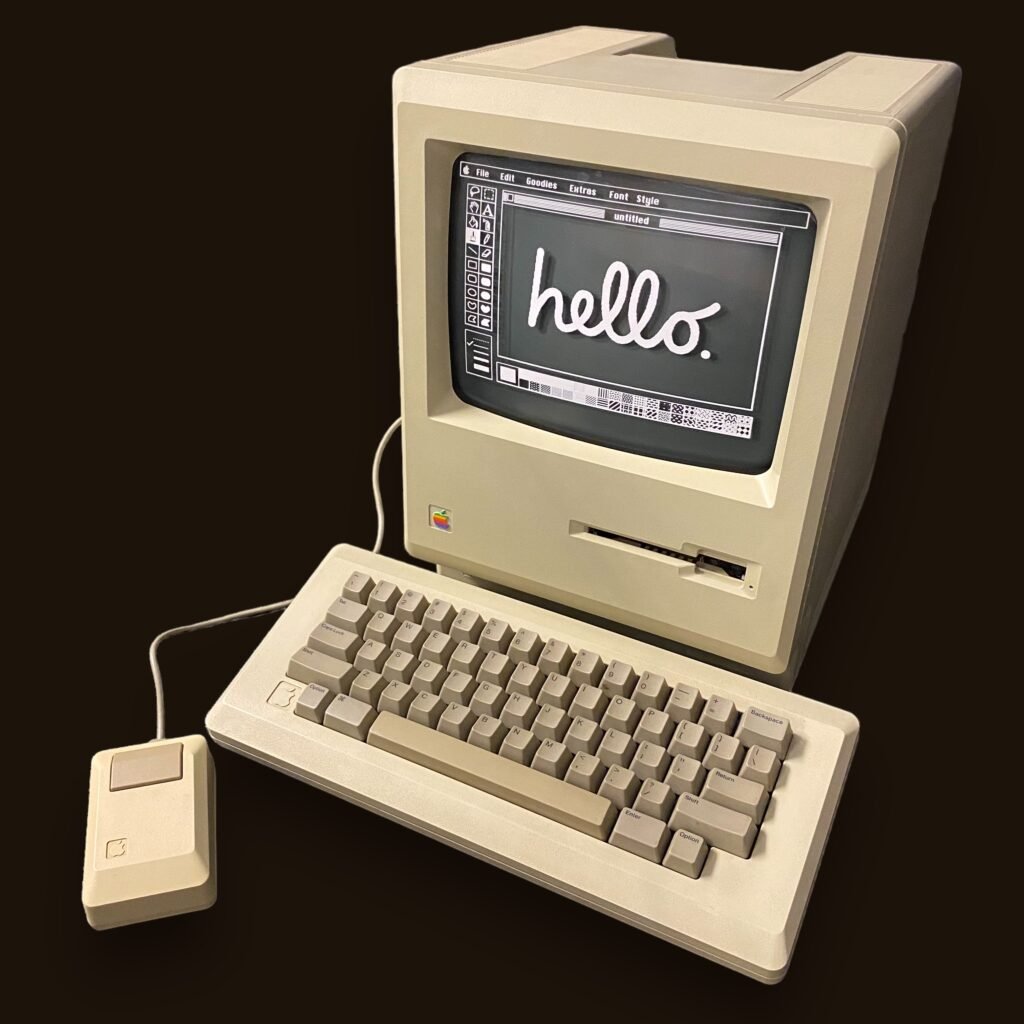
The Apple II, the Macintosh 128K, the Commodore 64 — these machines had faces. They felt like companions rather than tools. Even the “boring” beige PCs of the 1990s had chunky satisfying buttons, tower cases you could crack open on a weekend, and glowing power LEDs that pulsed with a kind of mechanical life. You felt something when you sat down in front of one.
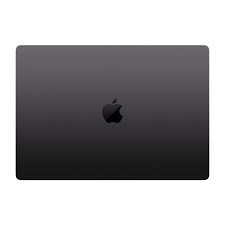
| THEN — Apple Macintosh (1984) The friendly face A personality etched into cream-coloured plastic. It literally had a face — the wide screen were its eyes, the floppy drive a smiling mouth. Wozniak and Jobs signed the inside of the case. It felt like something made by humans, for humans, with genuine warmth baked into every curve. | NOW — MacBook Pro M4 (2024) A perfect aluminium sheet Stunningly thin, impossibly fast, and completely anonymous. It could have been made by any of a dozen manufacturers. Without the logo on the lid you would genuinely struggle to identify its origin. Its highest ambition is to be invisible — and it succeeds completely. |
The keyboard alone tells the whole story. Old mechanical keyboards clicked and clacked and gave you feedback you could feel in your spine — each keystroke a small physical confirmation. Modern laptop keyboards are millimetres from flat glass. Technically impressive. Utterly impossible to love.
Mobile Phones: Quirky vs Identical
No category illustrates the boredom problem more clearly than mobile phones. From the Nokia 3310’s bulletproof little brick, to the Motorola Razr’s deeply satisfying snap-shut clamshell, to the Sony Ericsson W800i with its genuine orange Walkman buttons — early phones were adventurous objects with real opinions. You chose a phone partly because of what it said about you.
| THEN — Nokia 3310 (2000) An indestructible icon Swappable coloured covers, a Snake game that consumed entire lunch breaks, and a ringtone you can still hear in your sleep twenty years later. It was dropped, sat on, soaked in rain, and kept going. A cultural artefact disguised as a telephone — you knew exactly whose it was the moment you saw it across a room. | NOW — iPhone 16 / Galaxy S25 Glass, glass, and more glass Both are technically brilliant. Both are glass sandwiches with powerful cameras and fast processors. Both look nearly identical inside a protective case. They are differentiated almost entirely by a spec sheet — not by any personality you can see, touch, or feel sitting in your hand. |
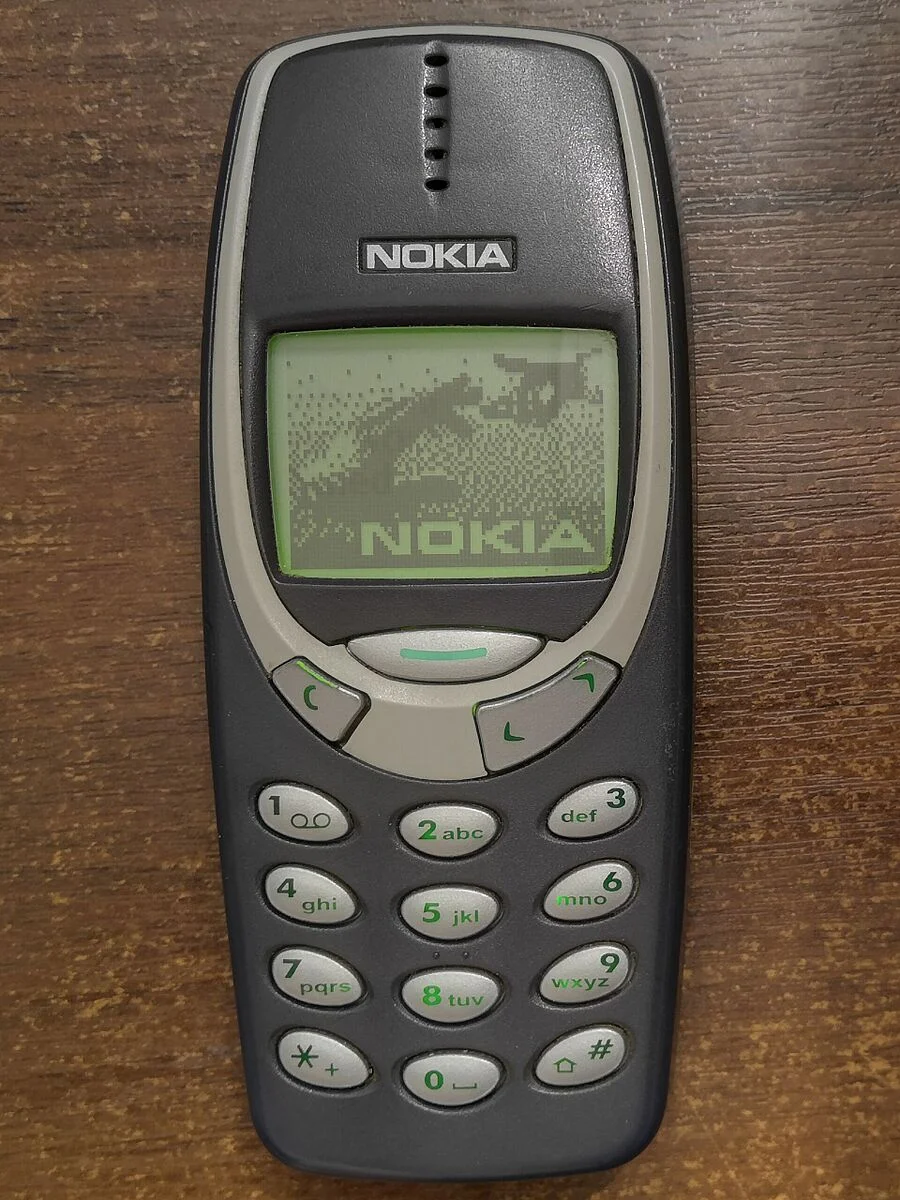
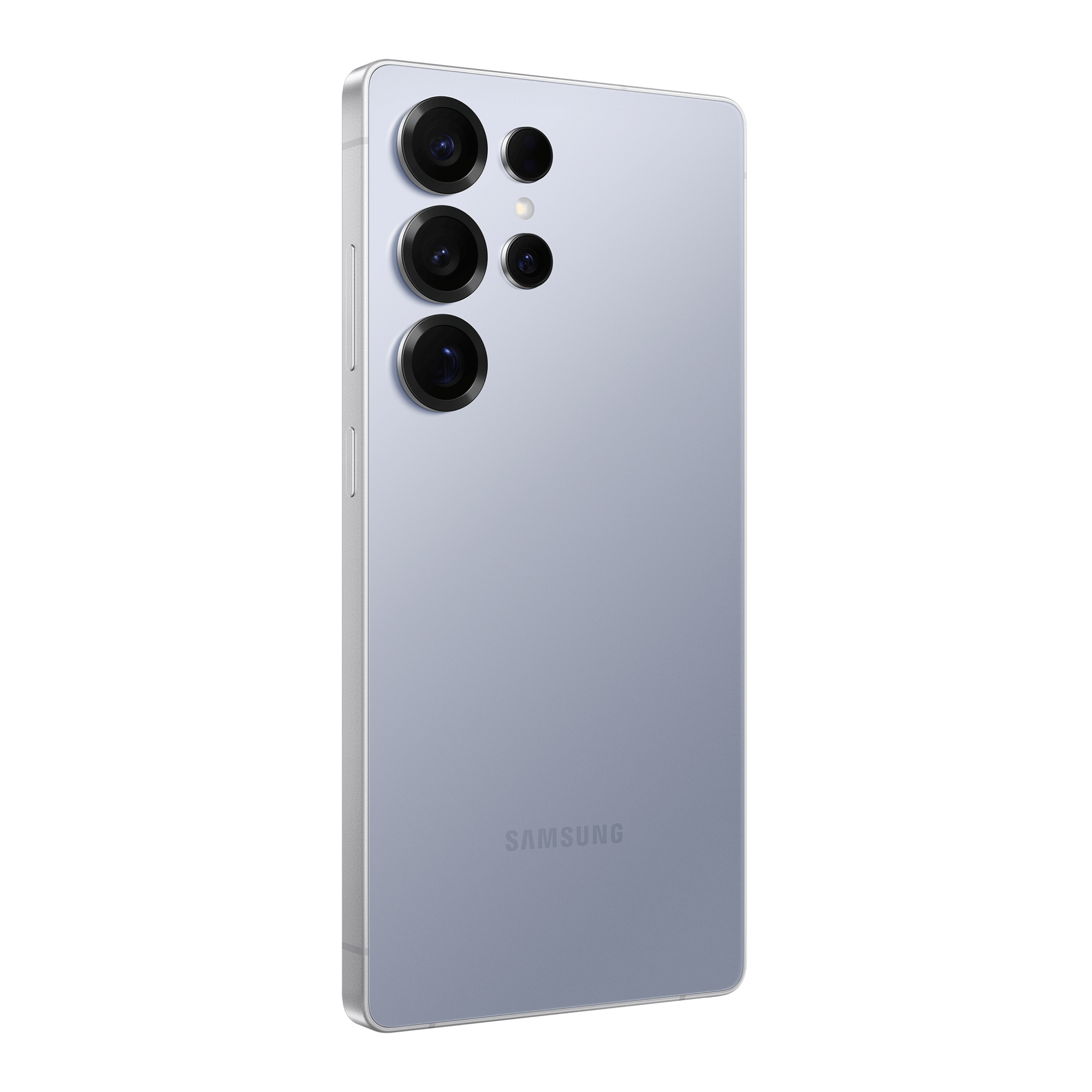
“In 2005 you could guess someone’s personality from their phone. In 2025 you cannot tell who made it without flipping it over.”
Televisions: Furniture vs Frames
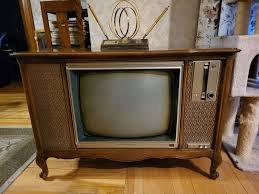
When colour television arrived in living rooms in the 1960s, it came housed in walnut cabinets with brass fittings. The television was a piece of furniture that families arranged the entire room around. It had presence, weight, and warmth — a cathode glow that took two full minutes to bloom into brightness. Switching it on felt like a small ceremony.
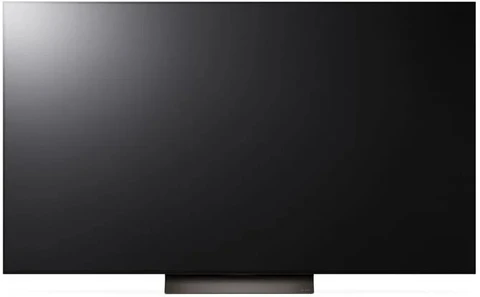
| THEN — 1965 Zenith Colour TV The living-room centrepiece A walnut veneer cabinet on legs, with satisfying rotary channel dials and a volume knob that clicked between positions. The warm glow of the CRT filled the room with light that felt organic. Families gathered around it as they once gathered around a fireplace on a winter evening. | NOW — 2024 OLED 4K TV A picture window on the wall 4K resolution, 120Hz refresh, Dolby Vision, thinner than a hardback book. The picture is genuinely astonishing. And yet the object itself aspires entirely to invisibility. Switched off, it is simply a black rectangle mounted on a white wall. It exists only when it is on. |
Gaming Consoles: Toys vs Black Boxes
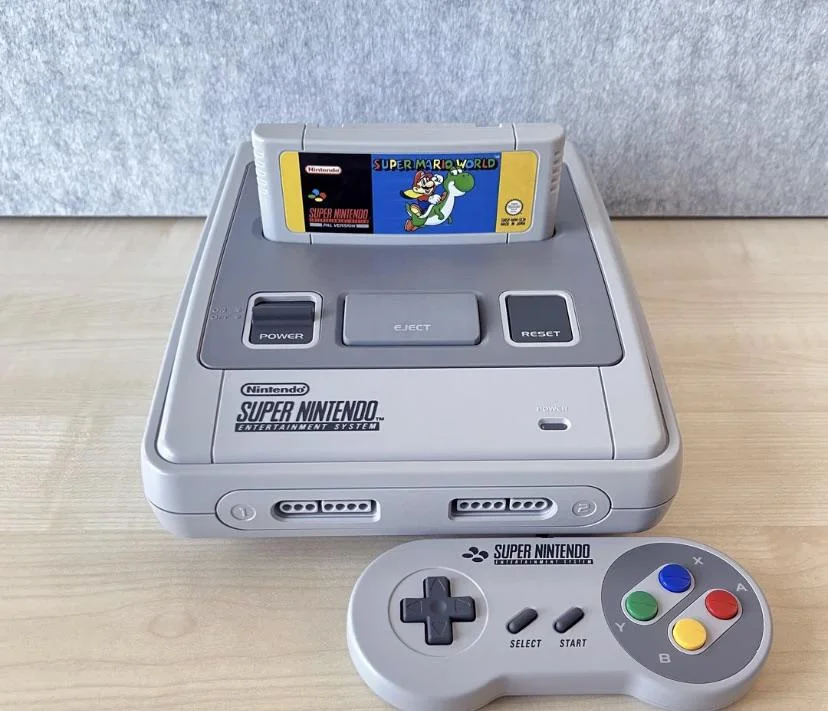
The original Nintendo Entertainment System looked like a toy — deliberately, cheerfully so. The Super Nintendo was sculpted with rounded shapes and playful coloured buttons. The Nintendo 64 had a wild, asymmetric controller that felt like nothing else. Gaming hardware wore its personality proudly, because it knew exactly who it was for and refused to be embarrassed about it.
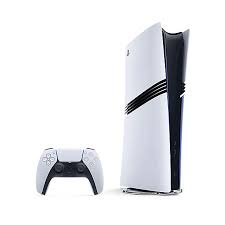
| THEN — Super Nintendo (1990) Playful and proud of it Rounded edges, four coloured face buttons that became icons of a generation, and a controller shaped for joy. The machine looked like fun before you even switched it on. Its design was a promise made to every child who looked at it — and it kept that promise without fail, every single time. | NOW — PlayStation 5 / Xbox Series X Premium monoliths Both are technically extraordinary machines capable of things unimaginable in 1990. But both could comfortably sit in a corporate lobby without looking out of place. They are designed for adults who want to feel like they own premium electronics, not children who simply want to play. |
Why Did This Happen?
The pattern that emerges across every single category is identical: old technology was expressive precisely because it had constraints. Engineers could not hide everything inside a chip, so they externalised function into form — into dials, fins, buttons, and distinctive shapes. Those externalised parts became personality, character, and identity. Miniaturisation and software then ate that personality whole and stored it in menus nobody reads.
There is also a blunt business reason for the convergence. An accessories industry worth tens of billions of dollars depends on phones being identical rectangles. An ecosystem of chargers, mounts, and cases depends on total standardisation. Standardisation is profitable. Boring is the price we quietly agreed to pay without ever being asked to vote on it.
And finally there is design by committee. Old products were frequently made by single visionary engineers or designers who simply decided what they liked and built it. Today every product passes through user research panels, A/B testing pipelines, focus groups in seven countries, and multi-market safety approvals. Averaging a thousand different opinions reliably produces something that offends nobody — and excites nobody either.
The Verdict
Modern technology is objectively superior by almost every measurable standard. It is faster, smaller, more reliable, safer, and accessible to more people than ever before in human history. But something real was lost: the sense that an object was made for someone, built with a genuine opinion, daring to be different from everything else on the shelf.
The good news is that the pendulum always swings back. Mechanical keyboards are back in fashion. Film cameras are outselling expectations among a generation that never used one before. The Razr folded again. Vinyl records outsell CDs. People are hungry for character — and slowly, tentatively, the industry is starting to listen.


An interesting perspective on why modern technology can feel less distinctive despite being more advanced. The comparison with older devices shows how standardization and minimalism have improved functionality while sometimes taking away the character and personality of the products we use.
:::
Great information! Students often need proper guidance to understand complex topics, improve their academic writing, and manage assignment deadlines. nursing assignment help can be a useful option for students looking for academic support and better understanding of nursing-related subjects. The content is informative and helpful for students seeking reliable study guidance.